Olympic & Titanic: Triumph and Disaster – Chapter 1

Olympic & Titanic: Triumph and Disaster – Chapter 1


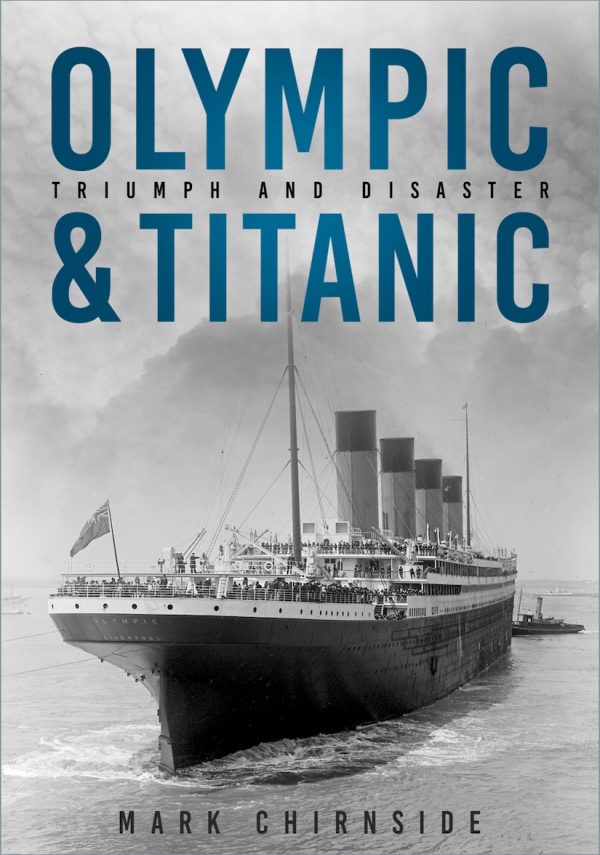
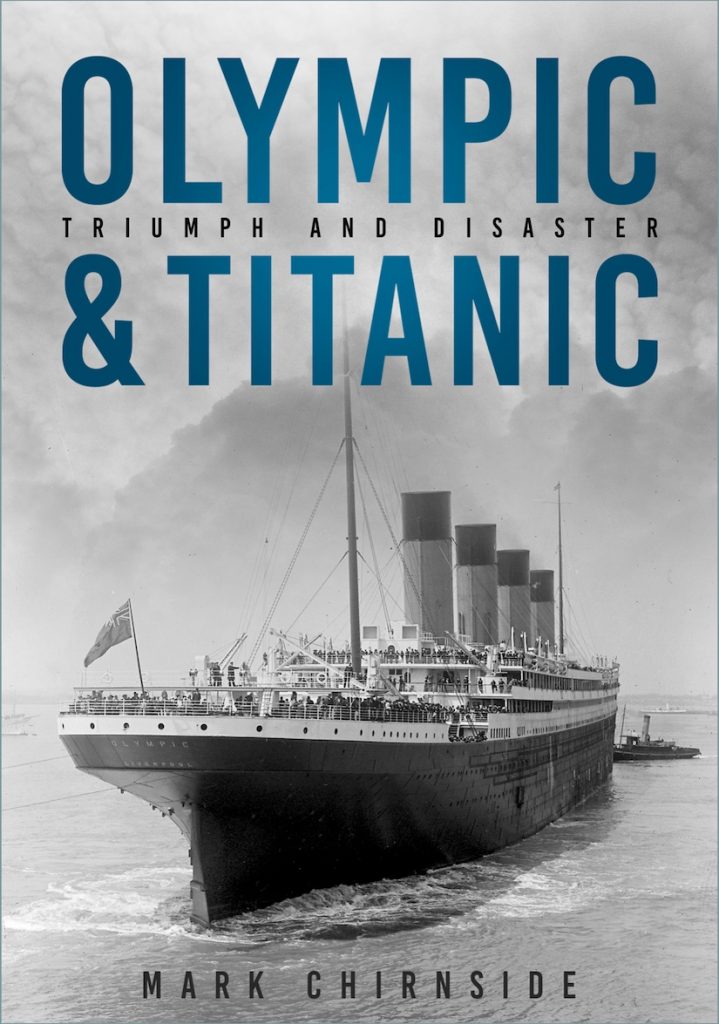
The first copies of Olympic & Titanic: Triumph and Disaster will be landing on readers’ doormats over the coming weeks!

It is an enormous book 416 pages in length (excluding the colour section) and so it is divided into three main parts.  The first part opens with Chapter 1, ‘The North Atlantic Run’ (34 pages), which examines the early history of the modern White Star Line from its purchase by Thomas Henry Ismay.  It is a remarkable story of a newcomer’s success on the highly competitive North Atlantic route.  We trace the basic details of the company’s early history as it orders a new fleet of ships exclusively from the Belfast shipbuilder Harland & Wolff, which competitors scramble to match.  Although the company’s policy turned to focus on comfort rather than speed in later years, data for 1872 shows their fleet’s average crossing times as being significantly less than their older, long established rival Cunard.

The Atlantic disaster was the first serious blot on the company’s record and involved a heavy loss of life.  We see Thomas Henry Ismay and his company making strenuous efforts to clear themselves from the charge that the ship had left port without sufficient coal.  The heartbreaking conclusion is that she had plenty of coal onboard when Captain Williams took the fateful decision to divert to Halifax.  This was based on erroneous information from his Chief Engineer, whose figures substantially under-represented the amount of coal onboard.  The diversion was the first in a chain of events that led to his command being wrecked on the rocks.  What emerges from the disaster is the impression of a strong, well-built ship which was lost through poor navigational practices and extraordinary complacency.

White Star survived the calamity and continued to grow.  There was even a suggestion in the late 1870s of a merger with Cunard.  We follow the company becoming immensely prosperous even though it faced tough economic times and see J. Bruce Ismay join the management in the early 1890s, followed by Harold Sanderson in 1895.  Cunard’s annual reports for this period read like a tale of woe and contrast with the White Star Line’s financial strength.  We see that White Star was not alone in experiencing ill-fortune: Cunard experienced a number of shipwrecks in the late 1880s. J. Bruce Ismay’s previously unpublished comments about the loss of Norddeutscher Lloyd’s Elba in 1895 illustrate that he was well aware of the potential risks in a shipowner’s business, perhaps even more so after the baffling loss of Naronic in 1893.

The increasing competition from German Lines and the move to a policy of comfort rather than speed are covered in some detail. Comments from White Star and Cunard personnel show clearly the benefits of larger, slower ships such as the ‘Big Four’ from the point of view of their seakeeping qualities and the financial results they generated.

The acquisition of a controlling interest in the White Star Line by IMM illustrates how keen the American combine was to get its hands on the shipping line.  There were many critics of the move and plenty of concern that British interests were being sold out to a foreign country.  These prompted comments from Lord Pirrie to a newspaper reporter in 1902:  

The first is the interests of the country – and I wish, by the way, you would invent some comprehensive word which would, unlike Briton, include Irishmen – my second is in shipbuilding, and my third in shipowning. In which of these capacities could I possibly be an assenting party to a scheme which threatened injury to Imperial interests and ruin to British shipbuilders and shipowners?

J. Bruce Ismay’s own discussions about the combine’s future show his shrewd eye for detail as a businessman.  We see him considering exactly the sort of strategic questions essential to IMM’s future, including consideration in 1902 of making Southampton the terminal for the fast passenger and mail service to New York – something which has particular relevance to the decision to order Olympic and Titanic five years later.  He looks at issues such as the amount of debt the combine will have (a prescient question considering its later history) and how they can make it run more efficiently, such as using bulk purchasing of coal supplies to try and negotiate better prices.

The details of the White Star Line’s relationship with Harland & Wolff and the growth of the shipbuilder in the late 1880s are covered, ending with the expansion of the shipyard’s facilities which enabled the new large ships to be built.  We then see Cunard’s perspective competing against the White Star Line through little-known correspondence from company management.  By 1902, Cunard was in dire need of capital and felt paralysed against its competition (White Star and the major German Lines):

The result was that if the Government did nothing, the Company must face either absorption or annihilation.

State support from the British government saved Cunard but left White Star with a choice of how to respond to both their principal British competitor and continental lines including HAL, HAPAG and Norddeutscher Lloyd. Their decision to move their express service to Southampton in 1907 leads into the strategic rationale for Olympic and Titanic.  No shipping company could realistically match the speed of Cunard’s new Lusitania or Mauretania.  It was simply not feasible economically.  White Star’s strategic choice was to opt for new ships which would nonetheless be competitive from a speed point of view, as well as providing more luxury and comfort for passengers – with a particular eye on the continental passenger traffic they were now competing more directly for. 

How they and Harland & Wolff went about meeting those objectives that is covered in Chapter 2…  


Olympic & Titanic: Triumph and Disaster Pre-Orders

Olympic & Titanic: Triumph and Disaster – Pre-orders are open!


Olympic & Titanic: Triumph and Disaster will be published by the History Press in April 2026.


This hardback volume, similar in scale to the acclaimed Titanic: The ‘Ship Magnificent’ books, is 416 pages (including c. 160 black & white and c. 20 colour images).  The text contains a treasure trove of little known information and previously unpublished anecdotes.  Whether your interest is in the design and engineering, financial, social or technical aspects of these ships’ history, you will learn something new.

Check out the book page for a preview and further information.


Signed and personally inscribed copies are now available for pre-order through this website.  The intention is that all copies ordered in March will ship soon after the book’s official release and before the end of April.  If you want a personal inscription as well as a simple author’s signature, please make sure to specify this when placing your order.  (Due to the book’s size and value, it will be shipped by tracked UK and global shipping services only.)

April is ‘Titanic Month’ and lots of new posts are planned, including many showcasing the new book.   For all the latest news, be sure to follow Mark Chirnside’s Reception Room through this blog and on social media! 


Olympic & Titanic: Triumph and Disaster

Olympic & Titanic: Triumph and Disaster

Mark Chirnside’s eagerly anticipated new book, Olympic & Titanic: Triumph and Disaster, will be published by the History Press in April 2026!

This hardback volume, similar in scale to the acclaimed Titanic: The ‘Ship Magnificent’ books, will comprise of approximately 368 pages (including c. 160 black & white and c. 20 colour images).  The text (200,000 words) is the result of years of research and the use of substantial primary source material.  Needless to say, it contains a treasure trove of little known information and previously unpublished anecdotes.  Whether your interest is in the design and engineering, financial, social or technical aspects of these ships’ history, you will learn something new.

Signed and personally inscribed copies will be available for purchase through this website and we will be sure to keep you updated over the coming months.

If you can dream—and not make dreams your master;
If you can think—and not make thoughts your aim;
If you can meet with Triumph and Disaster
And treat those two impostors just the same


Rudyard Kipling.


It is impossible to understand Titanic without appreciating the broader context: the development of the White Star Line and its competitors in the preceding decades; Anglo-German competition; the British fear of the ‘American peril’ as foreign capital increasingly controlled British shipping companies; and the relentless advance in shipbuilding and technology. This definitive reference volume explores the lead up to the construction of Olympic and Titanic; providing a step-by-step account of the design process; looking at the financial, logistical and political obstacles they had to tackle; the ups and downs of Olympic’s maiden season in 1911 and 1912; and summarising Titanic’s disastrous end. Relying on extensive primary source research and presenting much unpublished data, this new book is not only a valuable reference tool, but provides an essential insight into understanding this period of history.

For all the latest news, be sure to follow Mark Chirnside’s Reception Room through this blog and on social media! 


RMS Majestic: The ‘Magic Stick’ – What Are You Waiting For?

RMS Majestic: The ‘Magic Stick’ – What Are You Waiting For?

If you love ocean liners…what are you waiting for? Get this on your bookshelf now!

I am grateful to Captain Phill for his very positive review on his YouTube channel!  

It is packed with a wealth of additional photos…The colour section has also been expanded with some wonderful colour postcards and colour views of its lavish interiors and the two big things that need to be highlighted about this edition is that more information as come to light about its life as HMS Caledonia, the training ship, and so there is more information about what life was like for boys on that establishment and also what work had to be undertaken in order to convert the Majestic into the Caledonia… In addition to this he has found some wonderful nuggets of correspondence, letters, recollections from people who have travelled on the Majestic and their information about what it was like to be on this ship in the 1920s is pure gold…It adds a touch of warmth to the tale of this wonderful ship.

For those familiar with Mark’s work, you’ll know that he has a wonderful easy flowing style…You also know that all his information and statements are backed up with rigorous research.

Copies are still available with a signature and personal inscription, with secure payment options through this website.  If you have any queries before purchasing, please get in touch using the contact form.


RMS Majestic: The ‘Magic Stick’ – The Reviews Are In!

RMS Majestic: The ‘Magic Stick’ – The Reviews Are In!

Since its release early last month, the long awaited revised and expanded edition of RMS Majestic: The ‘Magic Stick’ has been selling very well.  I am grateful to all those who purchased a copy, because it is this support that makes it possible to continue researching, writing and publishing books about these great liners.  All the research and time involved in producing something like this makes it an expensive enterprise.  It is something that the vast majority of authors can only do part time, because it is not feasible as a full time occupation (if it were, I would probably have written a hundred books by now!)

The reviews are coming in and are very positive:

Just finished reading this book, after missing out on the first print, this was worth the wait, an absolutely fabulous book!

Copies are still available with a signature and personal inscription, with secure payment options through this website.  If you have any queries before purchasing, please get in touch using the contact form.


Tourist Class: Majestic, 1932

Tourist Class: Majestic, 1932

Although it was primarily their magnificent first class public rooms which hit the headlines, Albert Ballin made sure that second class passengers were not neglected.  His three enormous liners, as well as Cunard’s Aquitania, made significant advances in second class accommodation.  There was an increased variety of public rooms compared to Olympic.

Their accommodation was not enough to impress Cunard’s naval architect Leonard Peskett, who wrote in 1913 that Imperator‘s second class public rooms were: ‘All a long way behind that arranged for Aquitania‘.  He thought that the second class staterooms were of the same standard as other German liners ‘with the exception that all ceilings (in cabins that could be seen) are panelled’.  He noted that the gymnasium was a ‘new feature’ in second class (White Star also added a gymnasium to Britannic‘s second class accommodation).

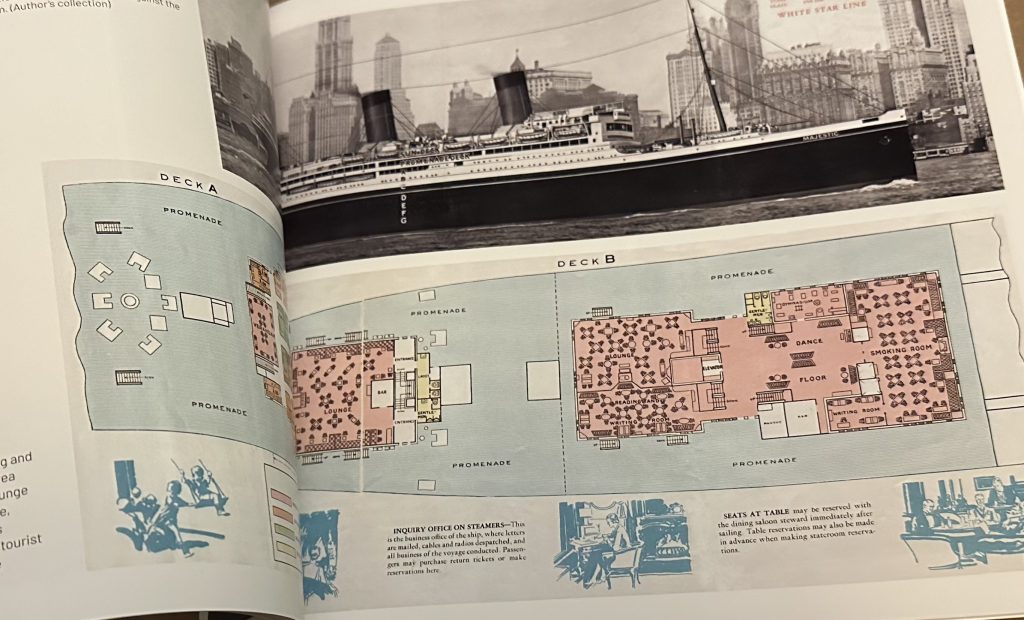
Nonetheless, Majestic‘s second class passengers had a smoking room and writing room available to them; a gymnasium; the main lounge and reading and writing room.  These were facilities which were not necessarily available to first class passengers onboard liners a few years earlier.  From the mid 1920s she carried second class passengers as well as tourist third cabin, but these classes were later merged to form a single ‘tourist class’.  In 1932, a lavish brochure was printed to show off the tourist class passenger accommodation.  The colour-coded deck plans showed all of the public rooms and stateroom accommodation available and are included in the new edition of RMS Majestic: The ‘Magic Stick’ which was released earlier this month.

Below: we see on the right the former second class public rooms in their tourist configuration and the dance floor added in the main first class companionway; to the left, the deckhouse with the large lounge further aft on B-deck was originally part of the third class accommodation; at the far left, we see part of the deck above and the veranda which was now available for tourist class passengers.  (The deck designations are those used in the latter part of her career.)


FAQ: Majestic’s ‘Record’ Passenger List

Did Majestic Carry the White Star Line’s Highest Ever Number of Passengers in September 1923?

It has sometimes been reported that Majestic set a record in September 1923, carrying the White Star Line’s ‘highest ever’ passenger list of 2,625 passengers. There are several discrepancies. The statement, or a variation of it taken from several websites, appears to be traceable to Duncan Haws’ Merchant Fleets Volume 19: White Star Line (Starling Press Ltd; 1990), page 90:

1923 Sept: Fastest then crossing 5 days 5 hours 21 minutes. Average 24.75 knots. Only Mauretania was faster. On one crossing carried 480 first, 736 second, 1,409 third = 2,625, the company’s highest ever.

The first problem is that Majestic only made one westbound departure from Southampton that month, on 12 September 1923. She carried 1,774 passengers, including 815 in first class (her highest that year, westbound). She did, however, make two eastbound departures from New York – on 1 September and 22 September 1923 – with passenger lists in all three classes totalling 607 and 657, respectively. None of these three September departures had such a record list, although they did include the best first class passenger list that year for the westbound crossing, and (eastbound) Majestic carried 853 in first class on her 23 June 1923 New York departure.

The report appears to refer to the 26 October 1923 westbound departure, when Majestic carried 475 first class, 731 second class, and 1,416 third class passengers for a total of 2,622 passengers, her highest that year in either direction.  When Majestic arrived in New York on 1 November 1923, the figures given in America by the North Atlantic Passenger Conference were:

  • 480 first class
  • 736 second class
  • 1,411 third class

That total was 2,627 passengers, which is also very close to the ‘record’.  (Any of the figures represented a record for Majestic herself.)  If Majestic did carry that many passengers, albeit the following month, was it right to claim it was the highest passenger list of a White Star Line vessel?

No. We know that Celtic carried 2,957 passengers in September 1904.  That appears to be the highest passenger list ever recorded for a White Star liner.


RMS Majestic: The ‘Magic Stick’ is available for pre-order!

The RMS Majestic: The ‘Magic Stick’ second edition is available to pre-order!

RMS Majestic: The ‘Magic Stick’  is being released as a revised and expanded edition by the History Press.  It is scheduled to be published on 14 March 2024.

When the original edition was released by Tempus Publishing in November 2006, it was the first book to focus solely on her history.  Lots of material and illustrations were published for the first time.  Critics loved it:

 ‘Mark Chirnside has once again delivered a book that not only tells a story, but also makes that story come alive – Majestic is no longer a mere footnote. RMS Majestic: The ‘Magic Stick’ is a book that fills the need for a comprehensive look at the White Star Line’s last flagship.’

Now, you can *pre-order* signed copies of the revised and expanded edition through this website.  The page count has been expanded 50 percent, from 96 to 144 pages.  It includes about 180 images (about 50 in colour), the majority of which are new (about a quarter appeared in the original edition). All in all, the revised and expanded edition is virtually a new book.  Highlights include previously unpublished information about

  • Cunard’s naval architect, Leonard Peskett, who set about examining Imperator when she entered service in 1913;
  • details of Edward Wilding’s role as he supported Bismarck/Majestic‘s completion and went about the unenviable task of liaising between Blohm & Voss, Harland & Wolff, White Star and the British Board of Trade (in particular, the struggle to get certain features accepted under British regulations as opposed to the German standards);
  • accounts about life onboard during the Roaring Twenties, including fights among the crew, drunken passengers falling overboard and getting into mischief;
  • life onboard HMS Caledonia for boys undergoing their training between 1937 and 1939;
  • data rich appendices, including a comparison of Imperator/Berengaria and Bismarck/Majestic‘s earnings throughout their careers. 

Other new features exclusive to the new edition include lavish deck plans of first and tourist class accommodation in full colour; a rare Italian brochure produced for third class passengers; detailed plans of the boiler and engine rooms drawn by the talented Lionel Codus; photos of life onboard in the 1920s and 1930s; and photos of her as HMS Caledonia, featuring areas such as the former first class dining saloon converted to a mess hall and boys undergoing training onboard.

To see page previews from inside the book and pre-order your own signed copy, checkout the Majestic book page .  Secure payment can be made by card or PayPal using the payment button (make sure you select your location – if your country is not listed, please contact Mark).  If you have a specific personal inscription you would like, make sure to include it with your order; if not, your copy will have the author’s signature and date. All pre-orders received by 14 March 2024 will be shipped as soon as the book is released. 


RMS Majestic: The ‘Magic Stick’

RMS Majestic: The ‘Magic Stick’ second edition

RMS Majestic: The ‘Magic Stick’  was published by Tempus Publishing in November 2006.  Unfortunately, the initial print run soon sold out and, following a change of ownership of the publisher, it was never reprinted.  For years, it has been rare to come across a second hand copy.  One was even advertised on Amazon UK for the grand total of £3,827.24 (plus postage) in 2014!

The good news is that this much sought after book is being released as a revised and expanded edition by the History Press.  The original book consisted of 96 pages and this has been increased to 144 pages, with new information and rare illustrations (particularly relating to her time as the naval training ship HMS Caledonia). There is an extensive colour section with previously unpublished images and deck plans. It is anticipated that the new edition will be available in spring 2024.

We will keep you posted. This blog will be updated as soon as signed copies are directly available, so stay tuned.


RMS Olympic: Titanic’s Sister

The revised and expanded edition of RMS Olympic: Titanic’s Sister is released by the History Press in the next few days.  Thoroughly improved and expanded from the original edition that was published in 2004, the new volume has been expanded from 320 to 352 pages, with a revised colour section.  Despite all this additional material, the new edition is being sold for the same price as the original was eleven years ago!