Happy New Year – 2026

Happy New Year – 2026!

Wishing you all a happy and healthy New Year!

It’s not every year that I post a ‘Happy New Year’ message, but it seems appropriate as we enter 2026.

2025 was a very busy period in so many ways.  It’s great that the number of visitors to Mark Chirnside’s Reception Room increased by 115 percent compared to the previous year.  New features such as ‘FAQ Fridays’ in July were very popular and I have had a lot of positive feedback from readers who have enjoyed the Frequently Asked Questions blog posts.  They address common questions but also serve as a myth-busting tool, because they discuss topics which are often subject to inaccurate information and explain why that information is inaccurate, using the primary source evidence.  Sadly, the reality of modern media and the internet is that inaccurate, sensationalised information so often goes viral, but putting the available evidence out there does go some way to remedying that for the discerning reader who values quality of information rather than quantity.

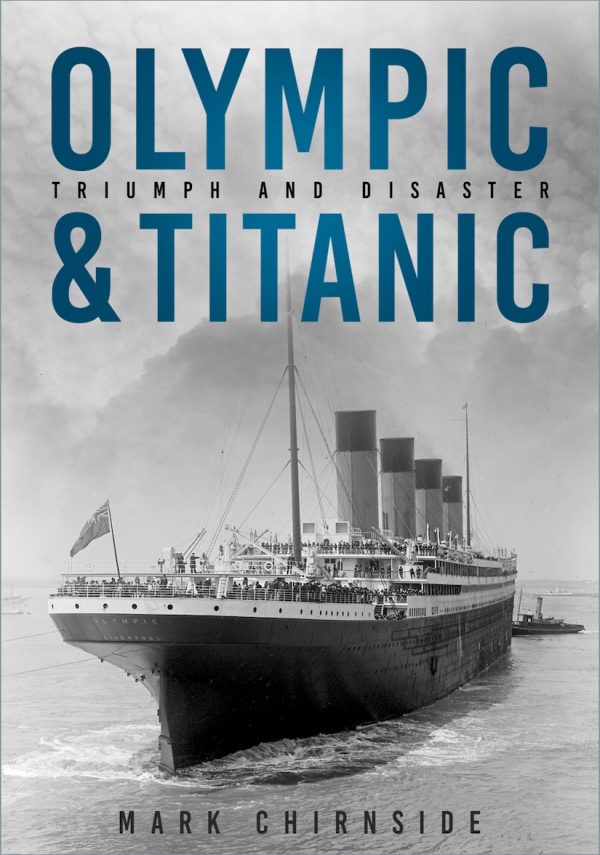
It was great to announce in September 2025 that the new book, Olympic & Titanic: Triumph and Disaster, will be published by the History Press in April 2026 (UK release).  This book has been in the works for a long time but the completed manuscript was only submitted to the publisher at the start of May 2025.

It might be helpful to explain the process of taking a book from idea to reality.

Authors are typically self employed and so each book project is written under its own contract and to a particular specification.  The author and publisher will have already agreed a format (which might be a lavishly illustrated paperback book with fewer words or a large hardback book with a focus on the information in the text).  Common practice is that there will be a range of tolerance for both the word count and the number of illustrations.  For this book, the image count came in right in the middle of what had been agreed but the upper limit of the word count was 200,000 words.  The finished manuscript ended up one word short!
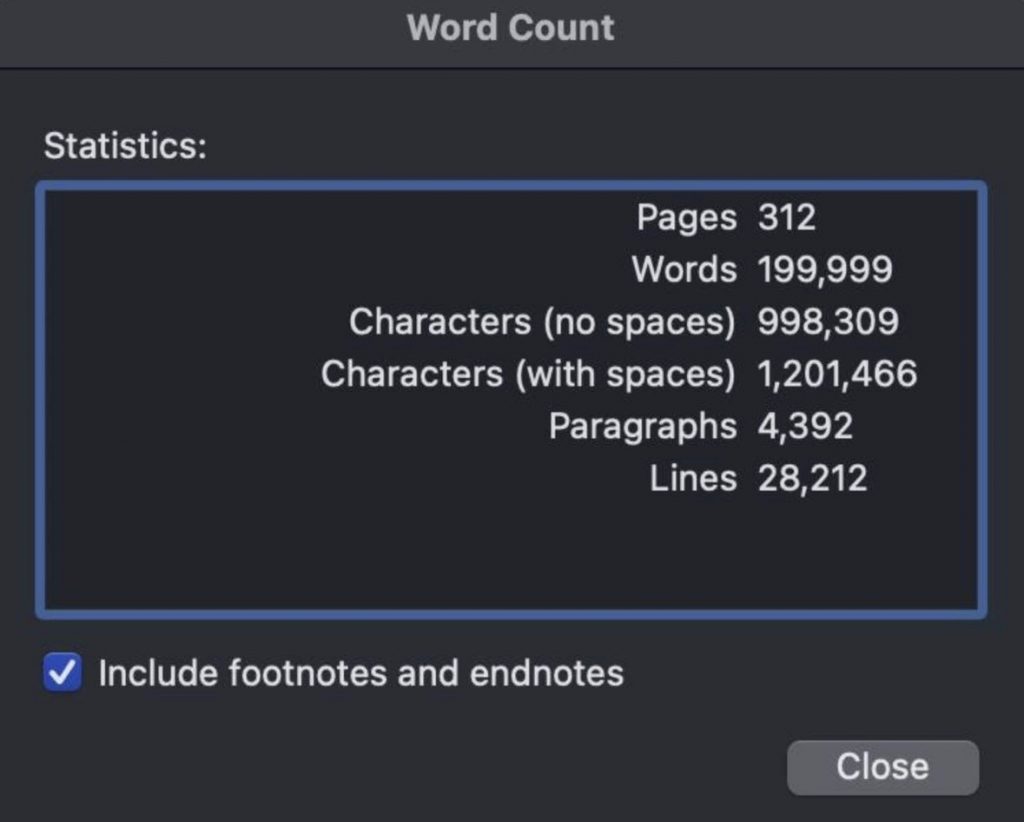
 

The complexity of a project such as this is only appreciated fully by those directly involved.  I was horrified to see I had burst through the maximum word limit and run to over 240,000 words.  This entailed slashing the manuscript before it could even be submitted to the publisher.  Cutting about 40,000 words required a disciplined editing effort on my part, but the end result was a sharpened focus on the key themes of the book.  (To help visualise the extent of the cuts, these words are the equivalent of the Majestic book.)  The cuts will not be wasted because they provide material for blog posts or articles in the future!

On submission of a book to the publisher, they will typically check over the manuscript and give it an initial read through to make sure that its content fits the original pitch.  They will map out how it will all fit together in the finished product and how many pages will be required, taking into account the word count, number of images and intended use of those images. (As the author, I personally find it helpful to make recommendations concerning each image submitted.  There might be some images which could be cut out if necessary, whereas another image might be rare or previously unpublished, meaning that it should be prioritised if space is at a premium during the book design process.  In other cases, images are directly referenced in the main text itself so making sure that they are used in the final book is essential!  The book designer will not necessarily be someone who knows the book’s subject and so it’s an important partnership between the author and designer to make sure we have a common understanding.)  In the case of this book, although the word count was (just) within the upper limit and the image count was in the middle of the range, the page count rose from the projected 368 pages to 416 pages (plus the colour section).  It’s a very big book!

Whipping the manuscript into shape typically involves a number of different editors.  They might come back to the author with queries if they feel a certain statement is unclear, or where a section of a chapter might benefit from being restructured.  In this case, I was relieved to hear that they thought the text was already in very good shape, but they made a number of recommendations which improved it a lot.

After months of work and queries back-and-forth, the author receives an initial set of page proofs to check over.  This is where they see for the first time how the text and images have all been moulded together into the book design template by the design and editorial teams at the publisher. Proofreading is a mammoth task and usually involves multiple sets of page proofs.  Initial comments / corrections are sent back to the publisher to be addressed; then a corrected set of page proofs is returned to the author to be checked and re-checked.  It is amazing how many errors come to light only on the third read-through!  A major challenge for the author is that they ‘know’ what they have written and so skim reading is not an option.  It is a very tiring, focused process to try and read what is actually on the to-be-printed page rather than what the author thinks it says.

This book was researched and written over an extended period of time.  One of my greatest pleasures was in learning new information about these ships from proof-reading my own book, because I ran across information again which I already knew but had slipped out of my memory!  I benefited from the input of a number of colleagues who kindly reviewed sections of text pertinent to their particular expertise before the manuscript was submitted to the publisher.  There were also others who were generous with their time and undertook pre-publication reviews based on the final product.  Some of these reviewers came back to me with specific queries and in many instances I checked and re-checked the source material underpinning a particular statement.  It goes without saying that any errors are the author’s ultimate responsibility.

Each book brings its own challenges.  My own experience is that there will always be something that is missed (hopefully a very small detail such as a comma being used somewhere instead of a full-stop), which can be frustrating given how hard all the individuals have worked to try and eliminate that sort of error.  Way back in 2006, when the first edition of the Majestic book was about to be signed off and sent to the printer, I realised to my horror that the page headers with the book title had ‘HMS’ Majestic rather than ‘RMS’.  It was a last-minute correction that saved a considerable amount of embarrassment!

In this case, one of the illustrations provided by a photo archive was incorrect.  The image (supplied directly to the publisher) showed the first class reading room rather than the first class smoke room. Although the archive reference number I had provided for the image was correct and I had fully intended to use a smoke room image, a well meaning individual at the archive had noticed that the archive catalogue description for that image incorrectly referred to the reading room and they substituted the image for the ‘correct’ one.  This necessitated sourcing the image again – and explaining that the ‘incorrect’ image was the one required!

Formatting rules can create complexity. Should a particular word be in italics or not? It’s often the case that foreign language terms (such as the name of a dish on a French menu) will be italicised. However, each publisher will have their own ‘house’ style guide to ensure consistency between all of their titles.  Some terms which are now in widespread use in English language publications are no longer appropriate for italics but should be formatted in roman.  Changing the formatting from the original manuscript to the text in the book design template can introduce inconsistencies if one term is changed but another is missed.  Therefore, it’s essential during the proofreading stage to make sure that all terms are formatted the same way.  In the case of original source quotations where I have emphasised a particular point in italics, it is always necessary to make sure that a notation has been included to explain it is the author’s emphasis (rather than the original source document) and that the italics made it through to the final book.

Ship names represent a particular problem.  By convention, they are always in italics but the formatting can be lost when the original manuscript is being transferred into the book design template.  The most obvious ones are easy to spot but reviewing the entire text to make sure any ship names have not been missed is always a challenge – and there is always one which will be missed.

Indexing presents its own challenge.  Indexing the content of the book can only be done very late in the process, because the layout needs to be 99 percent complete.  We need to have confidence that any page numbers will not be changing after the material has been indexed.  The process is laborious, but essential to help readers locate the material they want and to do justice to the sheer quantity of information in the book.  A whole series of decisions need to be taken.  Firstly, a judgement call on which subjects should be indexed.  Titanic is an obvious example of a subject which should be included, but such a large entry necessitates numerous sub entries beneath the main topic.  My approach was to cover the basic generalities first, then focus on areas where the book presents particularly important or new research and information.  Then there are other issues to consider – should a person’s title be used, or just their surname and first name?  What should be done in those instances where someone’s title changed?  For example, William James Pirrie only became a Lord in 1906.  He appears in the book decades before he had the title.  Then there are ship’s officers.  If an officer was promoted and appears in the text in both their junior and senior roles, which should be used?  Arguably, their most senior role, but it does create its own complications.  To keep things simple, I ended up using the simple surname, first name and/or initials for people’s index entries.  All of this minutiae might not be apparent to someone who picks up the book and skims the index for topics.

Another last-minute job is checking all of the cross references (‘see page X’), where the main text itself refers the reader to another section that is relevant, or to an image.  In some cases, image captions also refer the reader to the main text. Again, the final page numbers can only be confirmed once we’re confident nothing is going to be moved around or deleted for any reason.  For the final sign off before the book goes to print, the author and publishing team have to be as confident as they can be that no significant errors have been missed.

After weeks of intense collaboration on the page proofs, sending masses of corrections / comments back and forth, it was great to go on leave for Christmas, set the out of office email and drink some mulled wine!    


What’s planned for 2026?

There are more FAQs and other blog posts in the pipeline.  (If you have any suggestions for particular topics, do get in touch.  It might not be possible to respond to each individually, but all will be considered.)  April is naturally a busy Titanic month and you will see lots of new posts reflecting that.

Announcements about the new book and ordering options will all be published on this website – if you have not yet subscribed for regular updates via this blog, be sure to do so in order that you won’t miss out! 


On A Sea of Glass & Part Time Explorer 113th Anniversary Titanic Livestream 2025

On A Sea of Glass & Part-Time Explorer 113th Anniversary Titanic Livestream 2025

I am honoured to have been invited to participate in the On A Sea of Glass and Part-Time Explorer 113th Anniversary Titanic Livestream, which will be broadcast on Thomas Lynskey’s Part-Time Explorer channel on YouTube.  It starts at 9.30 p.m. Eastern Time (United States) on Monday 14 April 2025 / 2.30 a.m. (United Kingdom) on Monday 15 April 2025.  The livestream will also be recorded and available to replay afterwards.

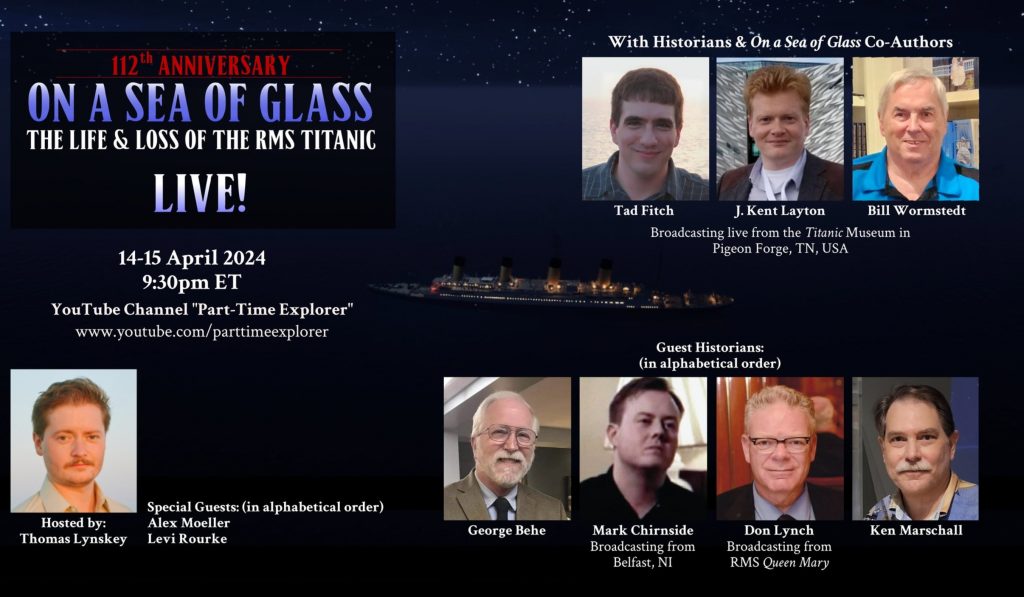
Hosted by Thomas Lynskey, it includes special guests Alex Moeller and Levi Rourke; historians and On A Sea of Glass co-authors Tad Fitch, J. Kent Layton and Bill Wormstedt; and guest historians Don Lynch, Ken Marschall and I. 


FAQ: How Much Did Titanic Weigh?

FAQ: Titanic‘s Weight: How Much Did Titanic Weigh?

Gross tonnage is NOT a measure of weight

There is a lot of confusion about the subject of Titanic‘s weight, which is not helped by some of the terminology used.  We often see references to the ship’s ‘gross tonnage’.  However, despite what the term implies with the use of the word ‘tonnage’, it is not a measure of weight.  It actually measures the total enclosed space within the ship’s hull and superstructure. Therefore references in the media which refer to a comparison of ‘gross tonnage’ and to Titanic being approximately 1,000 tons ‘heavier’ than her sister Olympic are completely inaccurate (and all too common).

The total weight of the ship (displacement) was calculated as 52,310 tons when she was loaded to her designed draught of 34 feet 7 inches – precisely the same as her sister Olympic.  (Their larger, younger sister ship Britannic had a displacement of 53,170 tons and the same designed draught.)  This was made up of the lightweight (the weight of the ship herself, including her hull, engines, machinery and permanent fittings before she was loaded for sea) plus the deadweight (the weight of the cargo loaded onboard, including everything from her human cargo – passengers and crew – to the coal, other supplies for the voyage and commercial cargo carried in the ship’s holds).  These figures are all given in the British, Imperial measure.

This data is taken from shipbuilder Harland & Wolff’s records and summarised below.  We see that Titanic in an unloaded condition weighed 480 tons more than her older sister Olympic and that her deadweight was correspondingly smaller. However, both ships’ total weight (displacement) was the same assuming that they were loaded to their designed draught.   


It is important to understand that, despite all the confusion in secondary sources (such as articles, books, television programmes and so forth), the primary source evidence (original, contemporary documentation) is all very clear in regard to how much the ship weighed.  The ship’s displacement is confirmed in multiple original documents, including Harland & Wolff’s records; Olympic‘s displacement scale (which shows how much water she displaced at a given draught); and the Board of Trade.  It is benchmarked against figures Thomas Andrews provided for Olympic in 1911.


Titanic’s Collapsible A: Oceanic, May 1912

Titanic‘s Collapsible A: Oceanic‘s First Officer Sights the Lifeboat Adrift, May 1912

This and many other incidents from Oceanic‘s interesting career are chronicled in Oceanic: White Star’s ‘Ship of the Century’ (signed copies are available for purchase through this website).

On 8 May 1912, every one of Oceanic’s lifeboats was ‘lowered into the water and tested’ before she left Southampton for Cherbourg, Queenstown and New York.  At Cherbourg, ‘Madam Navratil, mother of the two French waifs from the Titanic now being looked after in New York’ boarded.  She was one of 736 passengers, including only 61 in first class.

Five days later, Oceanic was well on her way to New York and steaming through a moderate swell with light southerly winds.  First Officer Frank sighted a boat to starboard in latitude 38˚ 56’ North longitude 47˚ 01’ West around 12.45 p.m.  Captain Smith ordered the ship stopped and she came to rest about 800 yards away.  Then the emergency boat was lowered in charge of the fourth officer, John Withers.  As word spread throughout the ship that the boat contained bodies, ‘passengers of all classes lined the rail’ to watch what was happening.  One month after Titanic’s sinking, the boat turned out to be her collapsible A lifeboat: one of two collapsible boats that floated off the boat deck in the ship’s final moments as her frantic crew ran out of time to launch them.

Withers returned and reported that the bodies were ‘not in a fit condition to be taken on board, and recommended that they be buried from the boat they were in’.  Dr. French was called to identify them and then Bo’sun Jones ‘volunteered to go and sew them up in canvas, as he had been a sail maker and had had experience in burying men in the Red Sea and other places in the East’.  Oceanic’s flag was lowered to half mast as Dr. French read out the service and Captain Smith, his officers and crew ‘stood to attention bareheaded on the upper deck with the passengers, who followed their example’:

As the doctor uttered the words ‘We commit these bodies to the deep’, the sailors let the three canvas covered bodies sink beneath the waves, and the boat pulled back to the Oceanic towing the Titanic’s boat astern.

By the position the boat was found in she must have drifted seven and three-quarter miles a day…

Smith recorded what happened in the ship’s log:

Three bodies were found in the boat but being decomposed and unfit for removal these same were committed to the deep from the boat, service being read by Doctor French.  One presumably was the body of Thomson Beattie, identified by name on pocket lining of coat, the others, a sailor and firemen respectively.  A fur lined overcoat was found in the boat and letters in pocket addressed to Richard Williams, also two rings welded together as one inscription on inside of one ‘Edward & Gerta’ on the other ‘Edward’.  Ship proceeded at 2.27 p.m. having taken on board collapsible boat which is marked No 1. Deck lifeboat certified by Board of Trade to carry 47 persons.

American newspaper reports (below) suggested subsequently that ‘the three men had lived for several days and died of starvation after devouring the cork in the lifejackets’.  White Star officials and Dr. French were quick to deny the suggestion ‘emphatically’.

Above: One of a number of sensationalised newspaper reports which falsely claimed that people who had initially survived the Titanic disaster subsequently ‘starved’ to death.  In reality, they were already dead when Collapsible A was set adrift.  (New York Evening World, May 1912)


‘Secrets of the Lost Liners’ Series 2

Secrets of the Lost Liners Series 2

Sky HISTORY’s Series 2 of their successful Secrets of the Lost Liners is coming soon!  The first episode features Titanic and will be broadcast on 29 April 2024.  I contributed to some episodes in Series 1, which were broadcast in 2022, and I was pleased to contribute to Series 2 as well.

#SecretsOfTheLostLiners @HISTORYUK


On A Sea of Glass & Part-Time Explorer 112th Anniversary Titanic Livestream 2024 replay

On A Sea of Glass & Part-Time Explorer 112th Anniversary Titanic Livestream 2024 – replay available on YouTube

The On A Sea of Glass and Part-Time Explorer 112th Anniversary Titanic Livestream, which was broadcast on Thomas Lynskey’s Part-Time Explorer channel on YouTube, is available to replay.

As I reflected earlier this week:

It was incredible to be part of the On a Sea of Glass livestream for the 112th anniversary of Titanic’s loss, hosted by Thomas Lynskey with special guests Alex Moeller and Levi Rourke; On A Sea of Glass co-authors and historians Tad Fitch, J. Kent Layton, Bill Wormstedt; and guest historians George Behe, Ken Marschall and Don Lynch.
I’ve learned so much from these guys and, as I think I mentioned during the event, Ken Marschall’s paintings illustrated the children’s book Exploring the Titanic, which was my first book about the subject as a young child. If I had been told back then that I’d have the honour of being part of this event, all these years later, I wouldn’t have believed it!
…Not forgetting the many other excellent events happening this last week, including Bruce Beveridge and Steve Hall discussing the countdown to collision and Titanic: Honor & Glory’s own livestream with stunning animations.
As we talked through the real time animation of the sinking, it struck me how fast time was going and my perception of it. It was ‘midnight’ before we knew it and I think many of us felt the pressure of time, simply trying to get in points of historical commentary. The sinking was relatively long compared to Britannic (1916), Lusitania (1915) or Express of Ireland (1914), but that was not how it seemed – and we had the advantage of knowing how much time was left. Those aboard Titanic had no such advantage and their circumstances were not editorial concerns for a programme, but a matter of life or death.
I did not sleep that night. In the morning, I emerged from the hotel to daylight and looked over the slipways where Olympic, Titanic and Britannic were built. Later, we saw a rainbow.


On A Sea of Glass & Part-Time Explorer 112th Anniversary Titanic Livestream 2024

On A Sea of Glass & Part-Time Explorer 112th Anniversary Titanic Livestream 2024

I am honoured to have been invited to participate in the On A Sea of Glass and Part-Time Explorer 112th Anniversary Titanic Livestream, which will be broadcast on Thomas Lynskey’s Part-Time Explorer channel on YouTube.  It starts at 9.30 p.m. Eastern Time (United States) on Sunday 14 April 2024 / 2.30 a.m. (United Kingdom) on Monday 15 April 2024.  The livestream will also be recorded and available to replay afterwards.

Hosted by Thomas Lynskey, it includes special guests Alex Moeller and Levi Rourke; historians and On A Sea of Glass co-authors Tad Fitch, J. Kent Layton and Bill Wormstedt; and guest historians George Behe, Don Lynch, Ken Marschall and I. 


Tourist Class: Majestic, 1932

Tourist Class: Majestic, 1932

Although it was primarily their magnificent first class public rooms which hit the headlines, Albert Ballin made sure that second class passengers were not neglected.  His three enormous liners, as well as Cunard’s Aquitania, made significant advances in second class accommodation.  There was an increased variety of public rooms compared to Olympic.

Their accommodation was not enough to impress Cunard’s naval architect Leonard Peskett, who wrote in 1913 that Imperator‘s second class public rooms were: ‘All a long way behind that arranged for Aquitania‘.  He thought that the second class staterooms were of the same standard as other German liners ‘with the exception that all ceilings (in cabins that could be seen) are panelled’.  He noted that the gymnasium was a ‘new feature’ in second class (White Star also added a gymnasium to Britannic‘s second class accommodation).

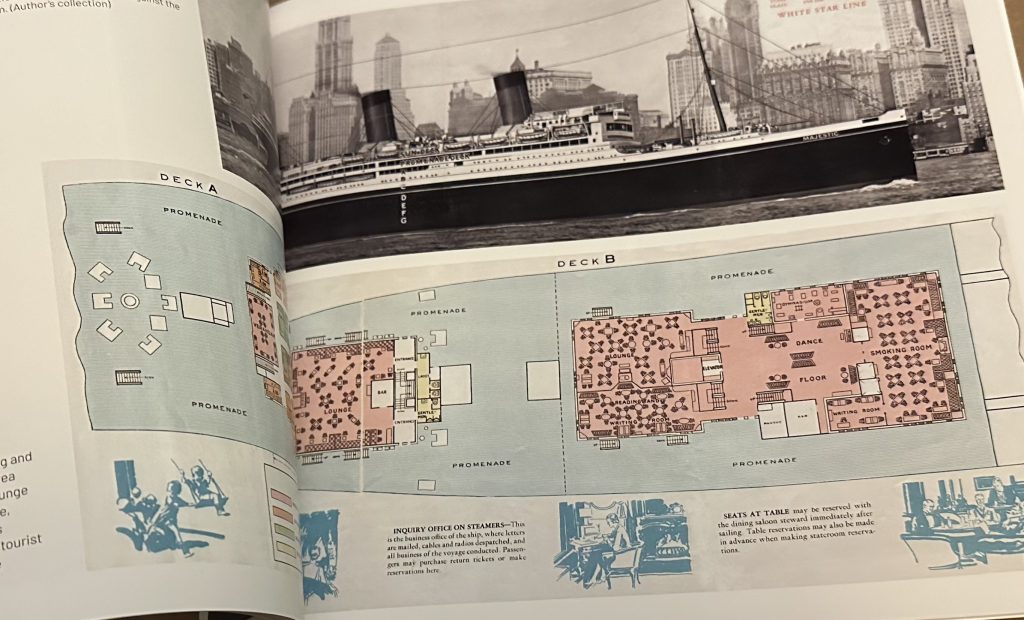
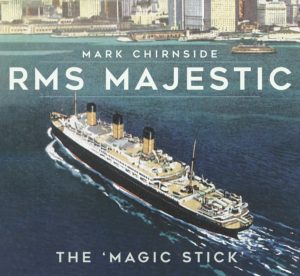
Nonetheless, Majestic‘s second class passengers had a smoking room and writing room available to them; a gymnasium; the main lounge and reading and writing room.  These were facilities which were not necessarily available to first class passengers onboard liners a few years earlier.  From the mid 1920s she carried second class passengers as well as tourist third cabin, but these classes were later merged to form a single ‘tourist class’.  In 1932, a lavish brochure was printed to show off the tourist class passenger accommodation.  The colour-coded deck plans showed all of the public rooms and stateroom accommodation available and are included in the new edition of RMS Majestic: The ‘Magic Stick’ which was released earlier this month.

Below: we see on the right the former second class public rooms in their tourist configuration and the dance floor added in the main first class companionway; to the left, the deckhouse with the large lounge further aft on B-deck was originally part of the third class accommodation; at the far left, we see part of the deck above and the veranda which was now available for tourist class passengers.  (The deck designations are those used in the latter part of her career.)


Man Overboard: Majestic, October 1926

Man Overboard: Majestic, October 1926

In the early hours of 13 October 1926, Majestic was experiencing stormy weather during one of her many crossings of the North Atlantic.  First class passenger David P. Davis and a younger female companion, Lucile Gehring, had been together since dinner the previous evening.  They were sat talking in the sitting room of Davis’ suite, D42, while Davis’ ten year old son George lay asleep in the bedroom, D44, next door.

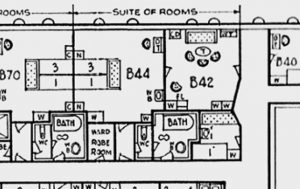
One of Majestic’s first-class ‘suite of rooms’ on the port side of D-deck, comprising a bedroom (D44) and sitting room (D42), wardrobe room and private bathroom facilities. The location of the sofa and the two portholes is clearly visible in the sitting room. (The deck designation later changed from D-deck to B-deck, as shown on this 1933 deckplan, so that B42 became D42 and B44 became D44). (Author’s collection)


They ‘had an occasional drink’ (a quart bottle of champagne between them) and Davis drank ‘half a bottle of rye whiskey’. Lucile ‘tried to leave on three separate occasions but he pulled her back after she had reached the door’. (Night watchman R.W. Tyrell ‘did not intervene as there was no violence and he knew the parties to be friends, who sat late as a rule’.)  Davis remarked: ‘If you go away and leave me, I’ll go through there,’ and pointed through the porthole. She thought it was ‘bravado’. He put his money on the table and ‘told her to keep it as she’d need it’. He ‘sat for a time in the recess of the port with his feet on the sofa’. She was ‘somewhat confused’ what happened next. He said ‘catch me honey, I’m slipping’ and ‘goodbye dearie here I go’.

She ‘caught his arm for a second’ but ‘almost before realising it he was gone’. She was ‘sure he slipped’. Her scream alerted Tyrell, who ‘immediately responded and reported to the bridge’. It was 5 a.m.: ‘The ship was immediately turned round, two lighted life buoys thrown overboard, emergency boats manned, officers and men stationed to keep a lookout…’ Majestic steamed 1½ miles to the westward of the buoys and circled slowly for an hour, but he could not be found. There was a ‘strong wind … accompanied by heavy rain and rough sea’.

This and other incidents, forming a rich social history of life onboard, are included RMS Majestic: The ‘Magic Stick’ , released later this month.

RMS Majestic: The ‘Magic Stick’ is available for pre-order!

The RMS Majestic: The ‘Magic Stick’ second edition is available to pre-order!

RMS Majestic: The ‘Magic Stick’  is being released as a revised and expanded edition by the History Press.  It is scheduled to be published on 14 March 2024.

When the original edition was released by Tempus Publishing in November 2006, it was the first book to focus solely on her history.  Lots of material and illustrations were published for the first time.  Critics loved it:

 ‘Mark Chirnside has once again delivered a book that not only tells a story, but also makes that story come alive – Majestic is no longer a mere footnote. RMS Majestic: The ‘Magic Stick’ is a book that fills the need for a comprehensive look at the White Star Line’s last flagship.’

Now, you can *pre-order* signed copies of the revised and expanded edition through this website.  The page count has been expanded 50 percent, from 96 to 144 pages.  It includes about 180 images (about 50 in colour), the majority of which are new (about a quarter appeared in the original edition). All in all, the revised and expanded edition is virtually a new book.  Highlights include previously unpublished information about

  • Cunard’s naval architect, Leonard Peskett, who set about examining Imperator when she entered service in 1913;
  • details of Edward Wilding’s role as he supported Bismarck/Majestic‘s completion and went about the unenviable task of liaising between Blohm & Voss, Harland & Wolff, White Star and the British Board of Trade (in particular, the struggle to get certain features accepted under British regulations as opposed to the German standards);
  • accounts about life onboard during the Roaring Twenties, including fights among the crew, drunken passengers falling overboard and getting into mischief;
  • life onboard HMS Caledonia for boys undergoing their training between 1937 and 1939;
  • data rich appendices, including a comparison of Imperator/Berengaria and Bismarck/Majestic‘s earnings throughout their careers. 

Other new features exclusive to the new edition include lavish deck plans of first and tourist class accommodation in full colour; a rare Italian brochure produced for third class passengers; detailed plans of the boiler and engine rooms drawn by the talented Lionel Codus; photos of life onboard in the 1920s and 1930s; and photos of her as HMS Caledonia, featuring areas such as the former first class dining saloon converted to a mess hall and boys undergoing training onboard.

To see page previews from inside the book and pre-order your own signed copy, checkout the Majestic book page .  Secure payment can be made by card or PayPal using the payment button (make sure you select your location – if your country is not listed, please contact Mark).  If you have a specific personal inscription you would like, make sure to include it with your order; if not, your copy will have the author’s signature and date. All pre-orders received by 14 March 2024 will be shipped as soon as the book is released. 


Article from the Archives: Majestic Specification File

Majestic was the largest ship in service from 1922 until 1935.  The new edition of RMS Majestic: The ‘Magic Stick’ will be published shortly and so it is worth taking a look at her key specifications and statistics.  This specification file was published in November 2007 and gives a good idea of the scale of the ship. It illustrates that Majestic carried up to 1,093 crew, including almost eight hundred in the victualling department, who were tasked with looking after the passengers in all three classes.  Her oil consumption per day was typically 840 tons (indeed, she burned 4,550 tons of oil during the course of her 189th westbound crossing in January 1935) and her engines developed an average of about 66,000 shaft horsepower.  Her gross tonnage (a measure of the ship’s size by the total enclosed space, not weight) was about 22 percent greater than Titanic‘s.  

Big Ships and Small Boats

New Article: Big Ships and Small Boats

A new article, ‘Big Ships and Small Boats’ has been uploaded.

In the years leading up to the Titanic disaster, ships were getting significantly larger.  A lot of comment at the time and up to the present day has focused on the increasing size of ships in relation to the lifeboats they needed to carry under the law.  However, this overlooks the fact that the size of a ship was not necessarily a reliable indicator of how many passengers and crew she could carry.  This article provides a snapshot comparison between Olympic and Carpathia in April 1912 and some comparative British government data looking at the largest foreign-going passenger steamers, their passenger and crew capacity and lifeboat provision.

It was first published in the Titanic International Society’s Voyage September 2022: Pages 3-4.


Article from the Archives: ‘Britannic: The Length and Breadth of The Ship’

Even today, precisely 107 years after Britannic‘s loss, her history is often misunderstood.  Many popular beliefs about her are demonstrably false.  Among them are two basic points about her dimensions:


  • The belief that she was 903 feet long (overall length), whereas she was exactly the same length as her older sisters.
  • The belief that her beam (breadth) was increased following the Titanic disaster in order to make room for the ‘inner skin’ which was fitted along the length of her boiler and engine rooms.  In reality, the decision to increase her beam had been taken already prior to the keel being laid.  

This detailed article provides an analysis of the evidence about her length and discusses the reasons her breadth was increased. It was first published in the Titanic Historical Society’s Titanic Commutator February 2020: Pages 171-76.


Aegean Sea 2016

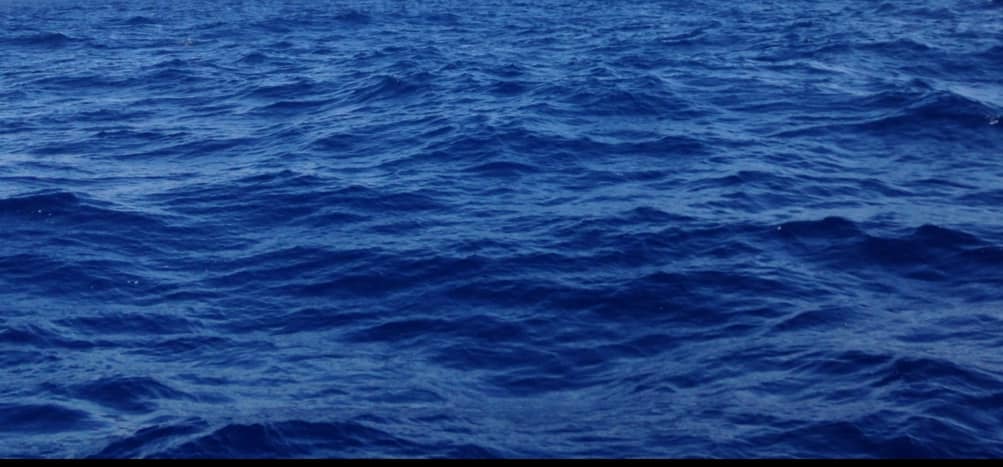
Above: The sea above Britannic‘s wreck is a beautiful, deep blue (photographed in 2016).  (Author’s collection)

Article from the Archives: ‘Lusitania and Mauretania: Perceptions of Popularity’

One of the common problems with research into Titanic history in particular, and ocean liner history more generally, is the repetition of claims in secondary sources (such as articles, books and television programmes) which do not match up to the available evidence.  One such claim is that Cunard’s Lusitania was more popular with the travelling public than her sister Mauretania.  Perhaps her tragic loss in May 1915 has distorted perception and memory as the years passed, because the available data on the number of passengers carried by both ships in the 1907-14 period is clear that Mauretania carried more passengers in total and a higher average passenger list. 


My article, ‘Lusitania and Mauretania– Perceptions of Popularity‘, was published in the Titanic Historical Society’s Titanic Commutator 2008 : Volume 32 Number 184: Pages 196-200.  It examined the number of passengers carried by each ship year by year and even included selected break downs by each class (first, second and third) and direction (westbound and eastbound). Although Lusitania carried slightly higher numbers of passengers initially, they drew level by 1909 and, from that point on, Mauretania was clearly in the lead.

RMS Majestic: The ‘Magic Stick’

RMS Majestic: The ‘Magic Stick’ second edition

RMS Majestic: The ‘Magic Stick’  was published by Tempus Publishing in November 2006.  Unfortunately, the initial print run soon sold out and, following a change of ownership of the publisher, it was never reprinted.  For years, it has been rare to come across a second hand copy.  One was even advertised on Amazon UK for the grand total of £3,827.24 (plus postage) in 2014!

The good news is that this much sought after book is being released as a revised and expanded edition by the History Press.  The original book consisted of 96 pages and this has been increased to 144 pages, with new information and rare illustrations (particularly relating to her time as the naval training ship HMS Caledonia). There is an extensive colour section with previously unpublished images and deck plans. It is anticipated that the new edition will be available in spring 2024.

We will keep you posted. This blog will be updated as soon as signed copies are directly available, so stay tuned.


Titanic Talkline

Titanic Talkline Podcast

My Titanic Talkline podcast (Season 1, Episode 17) is available online: ‘Mark Chirnside comes aboard this week for a great chat about the Titanic and her sister ships, Olympic and Britannic, as well as the Harland and Wolff shipyards!’ Thanks to Alexia Thirumalai for inviting me and hosting.


‘”The Old Rules…Are Entirely Obsolete”: British Lifeboat Regulation in the 1880s’

New Article: ‘”The Old Rules…Are Entirely Obsolete”: British Lifeboat Regulation in the 1880s’

A new article, ‘”The Old Rules…Are Entirely Obsolete”: British Lifeboat Regulation in the 1880s’, explores lifeboat regulations in the 1880s. They were comparatively worse than the rules in force when Titanic foundered in 1912, but a senior official argued  ‘you can make ships perfectly safe by [watertight] subdivision’.


Website Redesign

Mark Chirnside’s Reception Room has been overhauled to improve the user experience on mobile devices, make it easier to order books and generally refresh it for the 2020s. All credit for the work goes to TMB Studios!  


RMS Olympic: Titanic’s Sister

The revised and expanded edition of RMS Olympic: Titanic’s Sister is released by the History Press in the next few days.  Thoroughly improved and expanded from the original edition that was published in 2004, the new volume has been expanded from 320 to 352 pages, with a revised colour section.  Despite all this additional material, the new edition is being sold for the same price as the original was eleven years ago!