FAQ: Olympic & Aquitania – The Largest British Liner?
Published on
FAQ: Was Aquitania Larger than Olympic?
Didn’t Olympic lose the title of the largest British liner to Aquitania, in 1914?
The generally accepted standard for measuring if one liner is larger than another is to use gross registered tonnage, which is a measure of enclosed space (and not weight, as the term implies). On this measurement, Olympic was the largest liner in the world in 1911, at 45,324 gross tons; after the 1913 refit, her size increased to 46,358 gross tons. By that time, with the German HAPAG liner Imperator (later to become Berengaria) exceeding 52,000 tons, Olympic lost her right to the title of the largest liner in the world but remained the largest British liner.
Although Aquitania’s size was projected at 47,000 gross tons in 1913, when she entered service in 1914 she was measured at 45,647 gross tons. This was higher than Olympic’s gross tonnage in 1911, but – given that Olympic’s size had increased to 46,358 gross tons in 1913 – Aquitania was smaller. While both liners’ gross tonnage figures varied throughout their careers, Aquitania’s never surpassed Olympic’s. (When Britannic was in service in 1915-16, she was the largest British liner at 48,158 gross tons.)
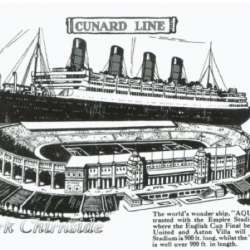
In terms of length, Aquitania was marginally longer than Olympic; and her width was several feet greater. By that standard, Aquitania would have appeared slightly larger to the keen observer if the two liners were ever side by side, and Cunard did claim on occasion that Aquitania was the largest British liner. However, on the more comprehensive measurement of gross tonnage then Olympic was always larger, and after the war White Star also pointed out that she was the largest triple-screw steamer in the world.